
The Norman Conquest of England refers to the invasion and occupation of England by an army of Norman, French, Flemish, and Breton troops led by William, Duke of Normandy, in 1066. The conquest was a significant event in English history and had a profound impact on the country’s political, administrative, and social structures.
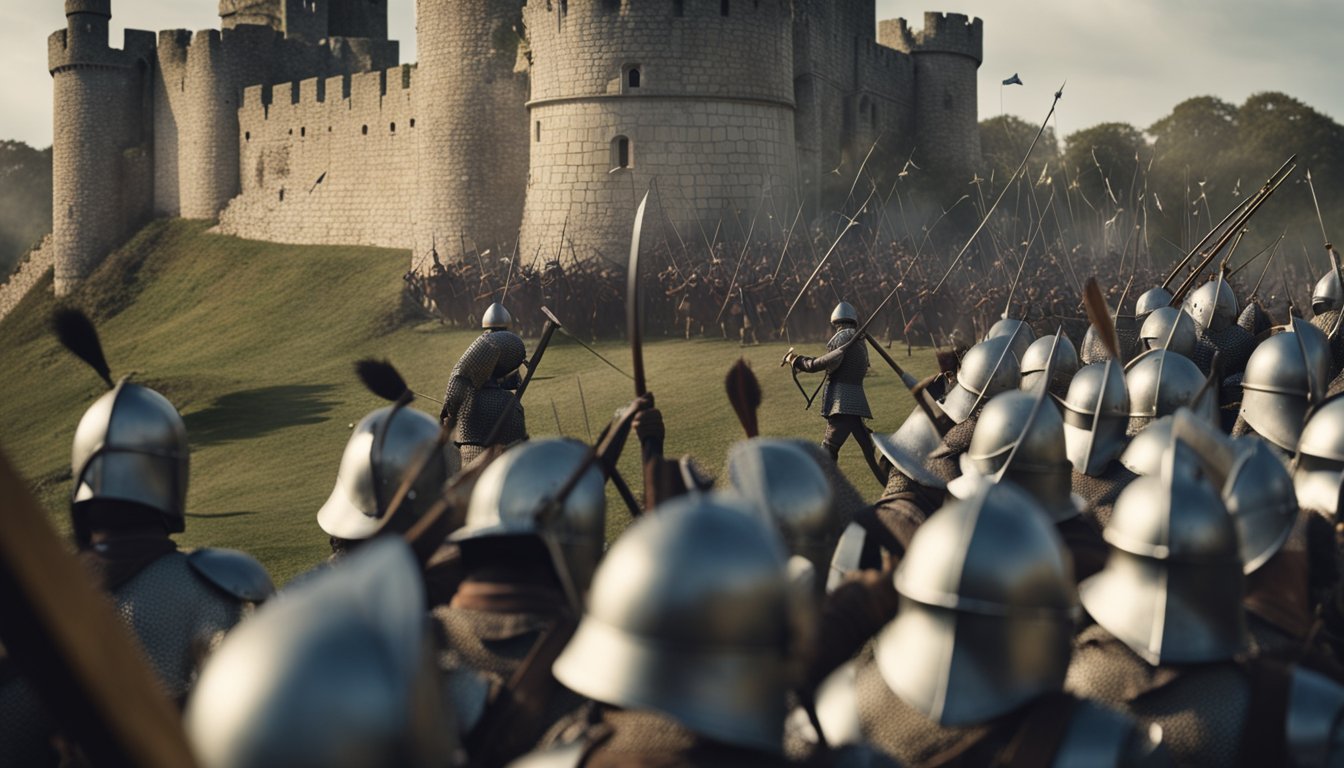
William’s claim to the English throne was based on his familial relationship with the childless Anglo-Saxon king, Edward the Confessor. When Edward died in January 1066, Harold Godwinson, Earl of Wessex, seized the throne, sparking a succession crisis. William, who had been preparing for an invasion of England, saw this as an opportunity to assert his claim to the throne and assembled an army to cross the English Channel.
On October 14, 1066, the two armies met at the Battle of Hastings, where Harold was killed, and William emerged victorious. This marked the beginning of the Norman Conquest of England and the start of William’s reign as King of England. The conquest brought about significant changes in England, including the redistribution of land to Norman nobles, the introduction of Norman French as the language of the ruling class, and the establishment of a centralized system of government.
Historical Background
Anglo-Saxon England
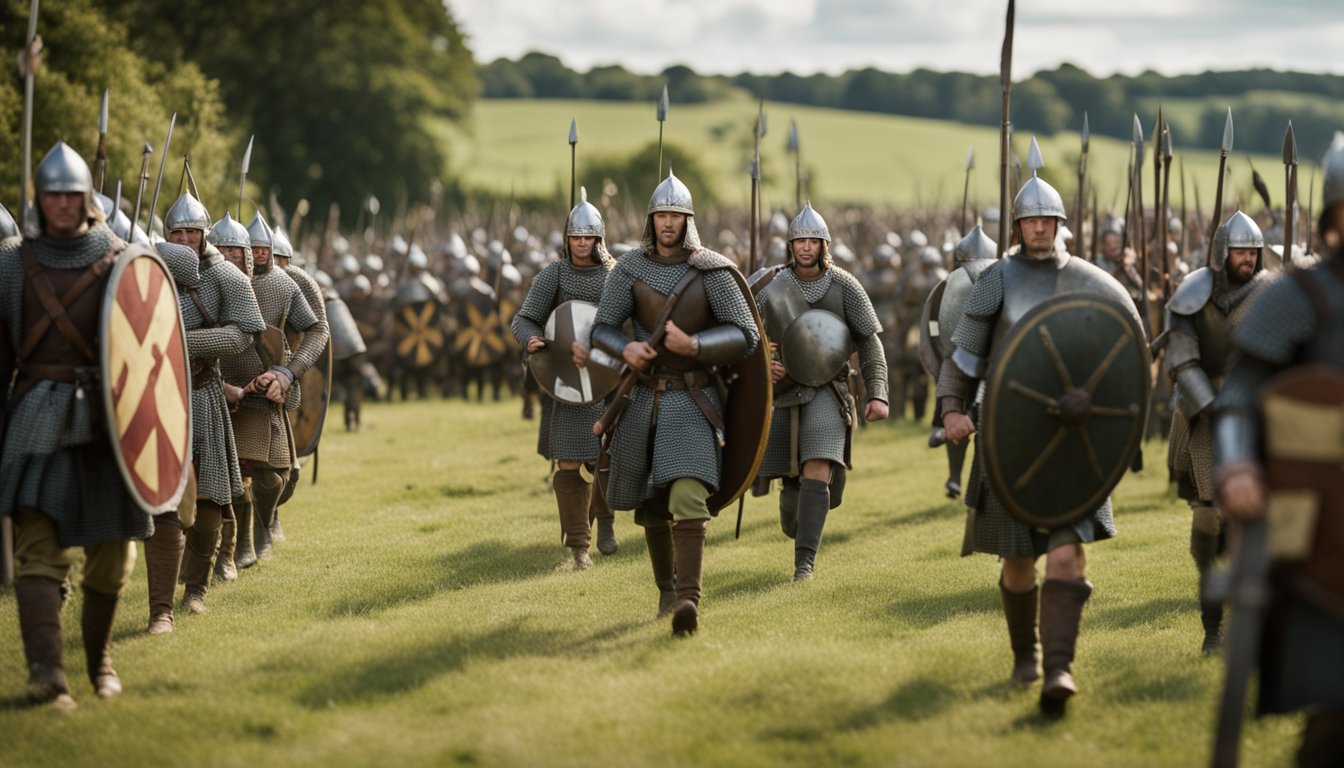
Before the Norman Conquest of England, the country was ruled by Anglo-Saxon kings. The Anglo-Saxons were Germanic tribes who migrated to England from the 5th to the 7th centuries. They established seven kingdoms, known as the Heptarchy, which were eventually united under the Wessex dynasty in the 10th century. The Anglo-Saxon period is characterized by its literature, art, and language, which influenced English culture for centuries to come.
Viking Influence
During the 9th and 10th centuries, Viking raids and invasions had a significant impact on Anglo-Saxon England. The Vikings, who came from Scandinavia, were known for their seafaring skills and their raids on coastal towns and monasteries. Eventually, they settled in England, establishing their own kingdoms and integrating with the local population. The Viking influence can be seen in the place names and language of England, as well as in its art and architecture.
Edward the Confessor’s Reign
Edward the Confessor was the last Anglo-Saxon king of England before the Norman Conquest. He ruled from 1042 to 1066 and was known for his piety and devotion to the Church. Edward had a close relationship with the Normans, having spent many years in exile in Normandy before becoming king. He also had no children, which led to a succession crisis after his death in 1066.
The historical background of the Norman Conquest is complex and multifaceted. The Anglo-Saxon period, the Viking influence, and Edward the Confessor’s reign all played a significant role in shaping the events that led to the conquest. Understanding this background is essential to understanding the impact of the Norman Conquest on England.
The Battle of Hastings
The Battle of Hastings was a significant event in the Norman Conquest of England. It took place on October 14, 1066, and marked the end of Anglo-Saxon rule in England. The battle was fought between the Norman-French army of William, Duke of Normandy, and the English army under King Harold II.
Harold II’s Ascension
Harold II became King of England after the death of Edward the Confessor in January 1066. However, his ascension to the throne was not without controversy. Harold’s claim to the throne was challenged by William, Duke of Normandy, who believed that he was the rightful heir to the English crown. Harold’s brother, Tostig, also opposed his ascension and sought the support of the Norwegian king, Harald Hardrada.
William’s Claim to the Throne
William’s claim to the English throne was based on his relation to Edward the Confessor and a promise that Harold had made to him earlier. Harold had taken an oath of loyalty to William and had promised to support his claim to the throne. However, after Edward’s death, Harold declared himself king and broke his promise to William.
Military Tactics and Strategies
The Battle of Hastings was fought near the town of Hastings in southern England. William’s army consisted of around 7,000 soldiers, while Harold’s army had around 5,000 soldiers. William’s army was made up of Norman knights, archers, and infantry, while Harold’s army consisted mainly of infantry.
William’s army used several military tactics and strategies to defeat Harold’s army. They used archers to weaken the English shield wall and then charged with their knights. Harold was killed during the battle, and his death marked the end of Anglo-Saxon rule in England.
In conclusion, the Battle of Hastings was a significant event in English history. It marked the end of Anglo-Saxon rule in England and the beginning of Norman rule. The battle was fought between the armies of William, Duke of Normandy, and King Harold II. William’s army used several military tactics and strategies to defeat Harold’s army, including archers and knights.
Aftermath and Impact
Political Reorganization
The Norman Conquest of England in 1066 brought about a significant political reorganization of the country. William the Conqueror, the new king of England, established a centralized monarchy and introduced a new system of government. He replaced the existing Anglo-Saxon aristocracy with his own Norman supporters, who were given land in exchange for their loyalty. This ensured that the king had a strong power base and could effectively govern the country.
Feudal System Implementation
One of the most significant impacts of the Norman Conquest was the introduction of the feudal system to England. This system was based on the exchange of land for military service and loyalty. William the Conqueror granted land to his Norman supporters, who then became his vassals. They, in turn, granted land to their own supporters, who became their vassals. This created a hierarchical society, with the king at the top and the peasants at the bottom.
Cultural and Social Changes
The Norman Conquest also had a significant impact on the culture and society of England. The Normans brought with them their own language, French, which became the language of the ruling class. This led to a division between the ruling class, who spoke French, and the lower classes, who continued to speak Old English. Over time, the two languages merged to form Middle English.
The Normans also introduced new architectural styles, such as the Romanesque style, which can be seen in many of the castles and churches built during this period. They also introduced new forms of art, such as illuminated manuscripts.
Overall, the Norman Conquest of England had a profound impact on the country’s political, social, and cultural development. It led to the establishment of a centralized monarchy, the introduction of the feudal system, and the merging of French and Old English into Middle English. These changes laid the foundation for the development of England as a modern nation.